• Why Hiring a Marketing Agency Is the Smartest Move for Nonprofits in 2026

    Why Hiring a Marketing Agency Is the Smartest Move for Nonprofits in 2026

    Nonprofits in 2026 are being asked to do more with less. Funding is increasingly competitive, teams are lean and expectations around transparency impact reporting and digital presence continue to rise. At the same time marketing is no longer optional. It is essential for fundraising volunteer recruitment, donor engagement and long term sustainability.

    Most nonprofit organizations operate with limited resources and small teams. Staff members often wear multiple hats managing programs, fundraising communications and operations at the same time. Marketing is frequently added to already full workloads which can lead to inconsistent messaging outdated digital assets and underperforming campaigns. In a digital first environment this creates real risk for nonprofit growth and donor trust.

    Hiring a marketing agency allows nonprofits to extend their internal capacity without increasing headcount. Instead of trying to recruit and manage multiple specialists an agency provides access to a full marketing team including strategy content design advertising analytics and technical support. This model allows nonprofits to scale marketing efforts while keeping costs predictable and manageable.

    One of the biggest benefits of working with an agency is time savings. Internal teams no longer need to manage campaigns, coordinate vendors or troubleshoot platforms. Agencies take ownership of planning execution and optimization using proven systems and workflows. This frees nonprofit staff to focus on mission delivery, donor relationships partnerships and community impact rather than marketing administration.

    Partnering with an agency also delivers significant cost efficiency. Hiring even one full time marketing professional can be more expensive than working with an agency and still does not cover all required skills. Agencies eliminate recruitment training and turnover costs while providing expertise exactly when it is needed. They also reduce wasted spend by applying data driven strategies and best practices from the start.

    Marketing agencies bring strategic focus and external perspective that internal teams often lack the time to develop. By analyzing performance data, audience behavior and campaign results agencies help nonprofits move from reactive marketing to proactive growth. Clear storytelling, consistent messaging and stronger engagement lead to better fundraising outcomes and increased visibility.

    In 2026 successful nonprofit organizations are those that recognize they do not have to do everything alone. Treating a marketing agency as an extension of the team allows nonprofits to use their resources more effectively, strengthen their presence and amplify their mission without stretching internal teams too thin.

    If your nonprofit is ready to increase visibility, strengthen donor engagement and grow sustainably without overloading your internal team we are here to help.

    Partner with a marketing agency that understands purpose driven organizations and knows how to maximize impact with limited resources.

    ,
  • Mastering Marketing Tech: 6 Steps for Marketing Leaders in the Education Sector

    Mastering Marketing Tech: 6 Steps for Marketing Leaders in the Education Sector

    This guide will include distinct steps that will make your job of mastering marketing tech much easier! Each of these steps is distinctly tailored for marketing leaders in higher education, education management, and post-secondary education organizations. Let’s dive in!

    1. Implement Learning Management Systems (LMS)

    A pillar of the education sector is having a robust learning management system. The platform in which your organization delivers content must be streamlined and facilitate interactive learning experiences. A robust LMS enhances educational offerings and makes them more engaging and accessible. All of which are vital for retaining and attracting new consumers in a highly competitive market. Some organizations are large enough to develop their own LMS while others may opt for a system such as Canvas or Blackboard.

    2. Leverage Virtual Reality (VR) and Augmented Reality (AR)

    Understanding how to integrate Virtual Reality and Augmented Reality into your mar-tech stack can seem overwhelming. There is also a predisposition to the expense of the hardware. If you haven’t seen it, look up how John Deere utilized these technologies in their marketing during the 2021 CES event by CNET. Of course, they are not an education-focused company, but it just shows how this technology can impact your marketing efforts. Develop a plan to offer a half-dozen or so virtual reality headsets at your organization’s next tradeshow or convention. This will be sure to bring more people into your booth! Offer these experiences coupled with real-life looks into your products and offerings.

    3. Adopt Marketing Automation Platforms

    Tools such as HubSpot and Marketo have an incredible amount of functionality for managing and personalizing marketing campaigns at scale. These tools also offer segmentation capabilities of prospects based on their engagement, behavior, and interests. Segmentation within these types of software allows organizations to tailor the messaging of their email campaigns, social media, and other marketing channels. Automation also allows organizations to ensure consistent communication with potential consumers. The goal of this technology and these efforts is to keep your offering, organization, and value at the top of your audience’s mind by nurturing leads on your contact lists. 

    4. Utilize Chatbots for Engagement and Support

    Consumers are generally appreciative of chat support on websites that they frequently visit. Now looking at it through the lens of your organization, do you want your organization’s website to be a site that consumers frequently visit? Of course, you do! So, let’s assume that having a chatbot is going to add value if this is the type of engagement you are building to experience. Chatbots should funnel consumers quickly through to live support and should be designed to limit and customer journey issues. These issues tend to generate more frustration than not having a chatbot would altogether, so make sure you are building the chat sequence in an effective way that considers the pathway consumers will take to get their questions answered. If done correctly, not only will you increase the satisfaction of your consumers, but you will also open up bandwidth for your team to focus on other pieces of your marketing efforts.

    5. Explore Predictive Analytics for Strategic Planning

    Predictive analysis tools allow marketers to forecast trends, enrollment, and demand with greater accuracy. The analysis of historical data and market trends allows your organization to make more informed decisions about strategic partnerships, course offerings, organizational development, and more. Tools such as GA4’s Predictive Metrics and Salesforce’s Einstein Analytics offer capabilities to analyze engagement and predict future behaviors. Insights are offered across various platforms and create the ability for your organization to implement more targeted and efficient marketing campaigns. 

    6. Invest in SEO and Content Marketing

    SEO technologies and content marketing tools can enhance your organization’s online visibility. To understand where to begin with any time or monetary investment into these technologies, first define your budget and goals. Then you can begin your keyword research into high-value search terms related to your audience, offerings, and industry. Tools such as Ahrefs, Moz, and SEMRush should be used in conjunction to find high-performing keywords and key phrases. Your content strategy should segway off of your keyword research. Aim to provide valuable, informative, and engaging content that addresses the needs of your target audience. Mediums of delivery to utilize would be blog posts, infographics, and downloadable content that highlight the strength of your organization’s offering. 

    Mastering these marketing technologies is not just about adopting new tools, it is about leveraging expertise that retains your audience and drives growth for your organization. Each of these steps builds a pathway to better-utilizing tools that are available to you for building out your organization’s Mar-Tech stack. 

  • Mastering New Marketing Technologies: A 9-Part Guide for Non-Profit Leaders

    Mastering New Marketing Technologies: A 9-Part Guide for Non-Profit Leaders

    Understanding how Marketing and Technology come together to create opportunity in the non-profit industry can be a challenge. Since we are all operating in an ever-evolving landscape, there is an increasingly recognized need for embracing new technologies that drive non-profit missions forward. To help non-profit organizations distill the available technology, we created this 9-step guide. 

    1. Content Management Systems (CMS)

    A foundational element of digital marketing is a strong online presence. Utilizing a robust CMS through platforms such as WordPress, Drupal, or Oxygen Builder offers friend user interfaces and extensive customization options. Each of these also allows for tons of plug-ins to enhance the functionality of your non-profit organization’s website. Another important aspect here is that managing your web content will become much more effective and efficient. 

    2. Customer Relationship Management (CRM) Tools

    At Sulzer, we are constantly screaming about the importance of effective CRM utilization. If your organization doesn’t have one, get one. If you do have one, make sure it is optimized for success. Software such as Salesforce NonProfit Cloud and Blackbaud can revolutionize how organizations manage donor relationships. Each of these tools allows for personalized communications, engagement tracking, and analysis into giving patterns. Each of these enables more targeted campaigns and fosters long-term supporter relationships. 

    3. Email Marketing Platforms

    Another piece of the mar-tech stack that we are constantly raving about at Sulzer is email marketing platforms. Platforms like Active Campaign and MailChimp allow nonprofits to create, deliver, and evaluate email campaigns with a few clicks. There are also segmentation features within each of these tools as well as automation capabilities. The design of these tools are built around a system that enables nonprofits to effectively communicate with their audience and drive engagement. 

    4. Social Media Management (SMM) Tools

    To manage the all-important efforts of social media, you can use social media management tools such as Hootsuite. This kind of tool is important for maintaining an active and engaging presence on social media platforms. These tools can also lighten the load on your organization’s marketing team by allowing posts to be scheduled in advance. Hootsuite also alerts users to mentions and comments to ensure quick responses and engagement with your organization’s audience. SMM tools are another avenue for the analytics of your audience. Hootsuite will allow you to track engagement and create data graphics to illustrate trends. 

    5. Analytics and Data Visualization

    We will scream about analytics until we are blue in the face! I mean it. Active process improvement is a bedrock for success in any industry, but especially in the non-profit sector where budgets are always tight. Google Analytics is a must-use marketing technology. Without it, your organization is operating blind when it comes to digital engagement on your website. With Google Analytics, we can understand web traffic, user behavior, and the bottom-line effectiveness of a marketing campaign. This data, similar to SMM tools, can be driven further with data visualization tools such as Tableau. This can help your non-profit organization transform data sets into understandable and actionable insights.

    6. Search Engine Optimization (SEO) Tools

    Utilizing software such as Moz or Google Trends gives non-profits the ability to analyze the search performance of their website. These tools allow non-profits insights into the keyword opportunities that exist for the audience. Another great tool that can be used to learn more about the issues your audiences is facing and the questions they have is AnswerThePublic.com

    7. Digital Advertising Platforms

    Non-profits often shy away from the cost related to paid advertising and media buying. We have always understood the restrictions that non-profits face with budgets but we are always trying to educate on the importance of a paid media strategy and how it helps make up your marketing approach. Paid ads offer a direct funnel of traffic to your organization’s mission, offer, and identity when done correctly. Google Ad Grants also offer non-profit organizations a maximum of $10,000.00 per month in grant money for non-profits. However, we have found that these grant dollars are often more effective when coupled with a paid budget as well. 

    8. Video Marketing Software

    Video marketing is an increasingly important tool for resonating with donors and increasing engagement. Video content is still king and has no signs of slowing down. Tools like Vimeo and Adobe Premier Rush offer the capability to create, edit, and share high-quality videos. These videos are often the most effective creative medium for sharing an organization’s message in a powerful and emotional way

    9. Mobile Marketing Solutions

    To wrap things up, we often push for non-profit organizations to embrace mobile marketing solutions. These can look like text-to-give services and a mobile-optimized website. It is essential to understand how your audience consumes content and information and there is a good chance they are doing this through their mobile devices, Embracing mobile marketing solutions can significantly enhance your audience’s user experience and boost engagement and support. 

    Mastering these new technologies isn’t about keeping up, it is about getting ahead! These tools are available and are increasingly proficient every day. They allow for ease of engagement with your organization’s audience which helps achieve organizational goals. The technologies in this guide will enhance any non-profit organization’s marketing efforts and drive more effective positive change. 

  • How to use AR in your marketing initiatives

    How to use AR in your marketing initiatives

    The use of augmented reality, or AR, has surged in popularity in the last few years. Now marketers are beginning to innovate exciting ways to use AR for brand acceleration. According to e-Marketer, the average smartphone user in the US spends 190 minutes per day on their device! And 90% of that time is spent in apps! Let that sink in for a moment. Yes, go ahead and re-read it… we will wait… So, if the average smartphone owner spends that much time on their device (and the number is growing annually), how can you capture some of that attention? AR might be the option for your brand to explore.

    While AR has been around for several years now, it is often confused with virtual reality. However, there are major differences between the two technologies. Augmented reality combines something virtual with the real world. Think, for example, of the well-known “rabbit ears” face-filter on Snapchat. Alternatively, virtual reality is removing the real world completely from the experience and re-creating a totally separate reality.

    Before diving into committing your resources to develop AR, make sure it has a purpose. After all, you don’t want to develop AR if you don’t have a good reason to.

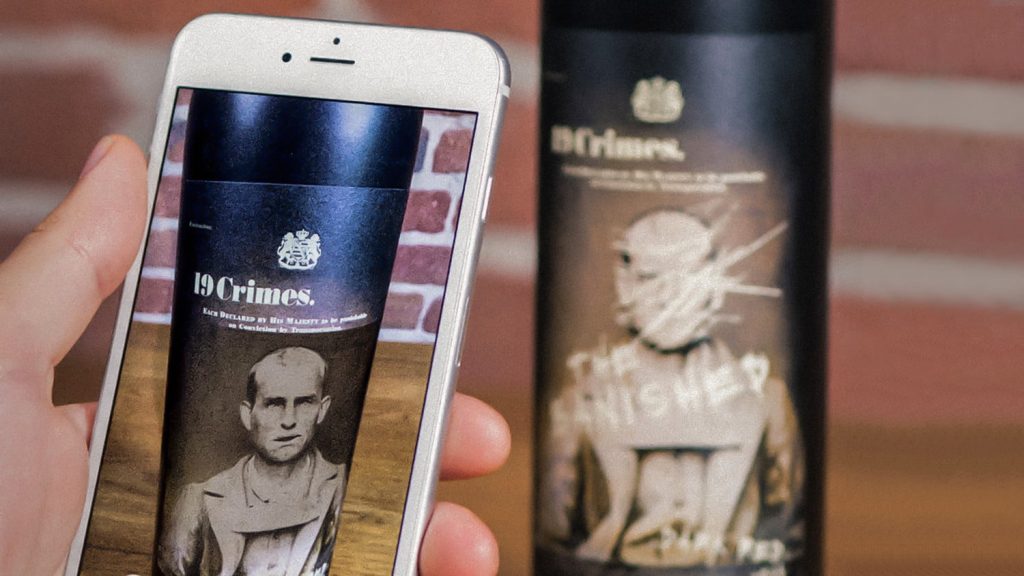
    • AR as a brand differentiator Think first-mover advantage here. When 19 Crimes introduced the first wine labels with AR, their revenues increased by 70%! While the novelty may wear off, it can certainly get people talking about your brand and introduce new consumers to it.
    • AR to decrease friction You should be asking yourself, how can AR help inform or facilitate a better user experience (UX) for my target audience? You should be thinking about alleviating pain points in the buying cycle. This will lead to a more informed purchasing decision in less time. Sherwin Williams has done an excellent job of immersing its target audience with its ColorSnap® Visualizer by helping them see what their paint choices will look like after the project is complete.  
    • AR to educate Is your product or service something that needs to be explained to your target audience? If you need to educate your buyer, AR may be used to help your buyer understand more about your brand.
    • AR as an experience AR can be a great way to place a product or experience into a real setting. When StubHub introduced AR in Super Bowl LII, their goal was to help attendees familiarize themselves with the stadium and the surrounding City of Minneapolis.


    Our Client, Wish Farms, Augmented Reality and App

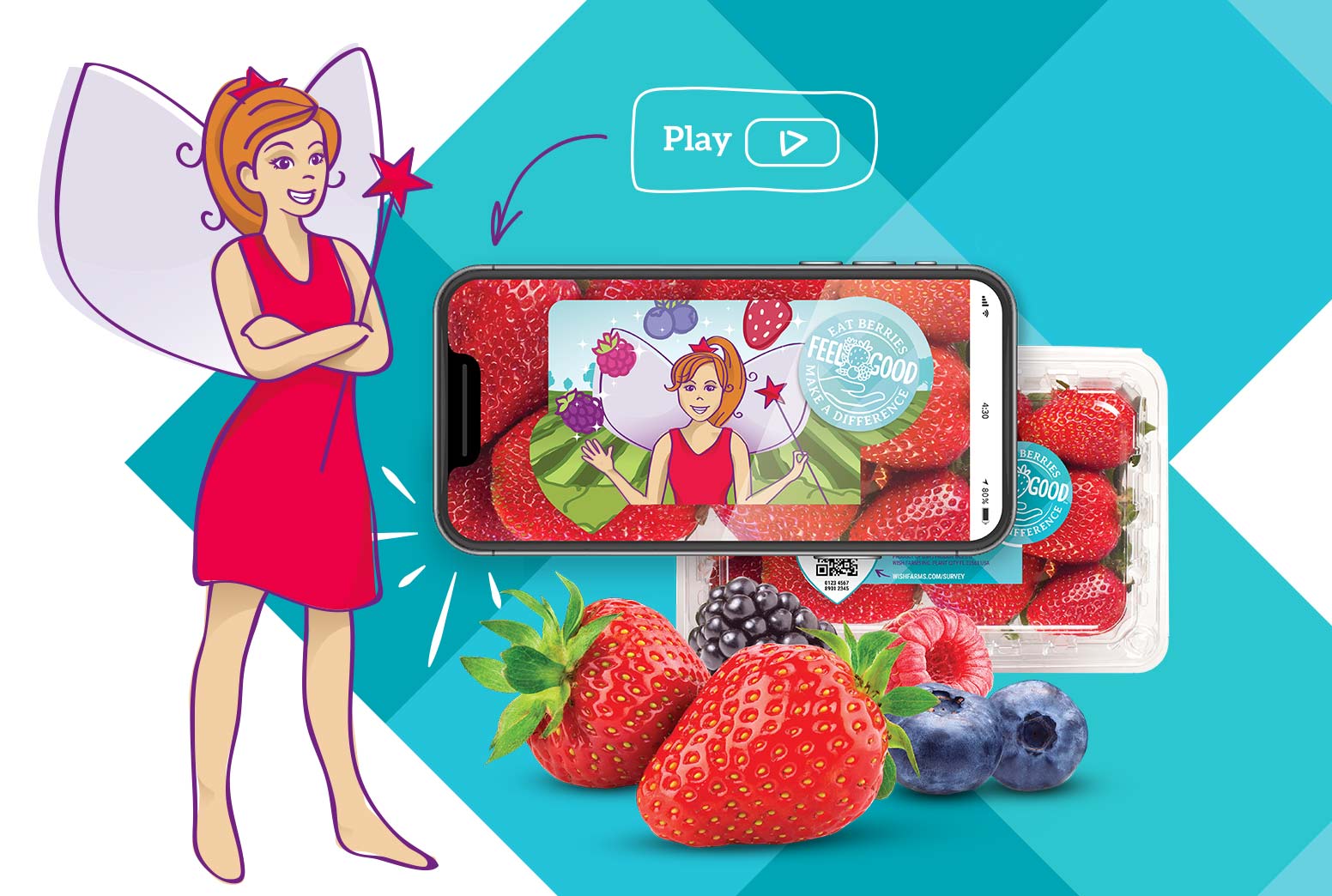
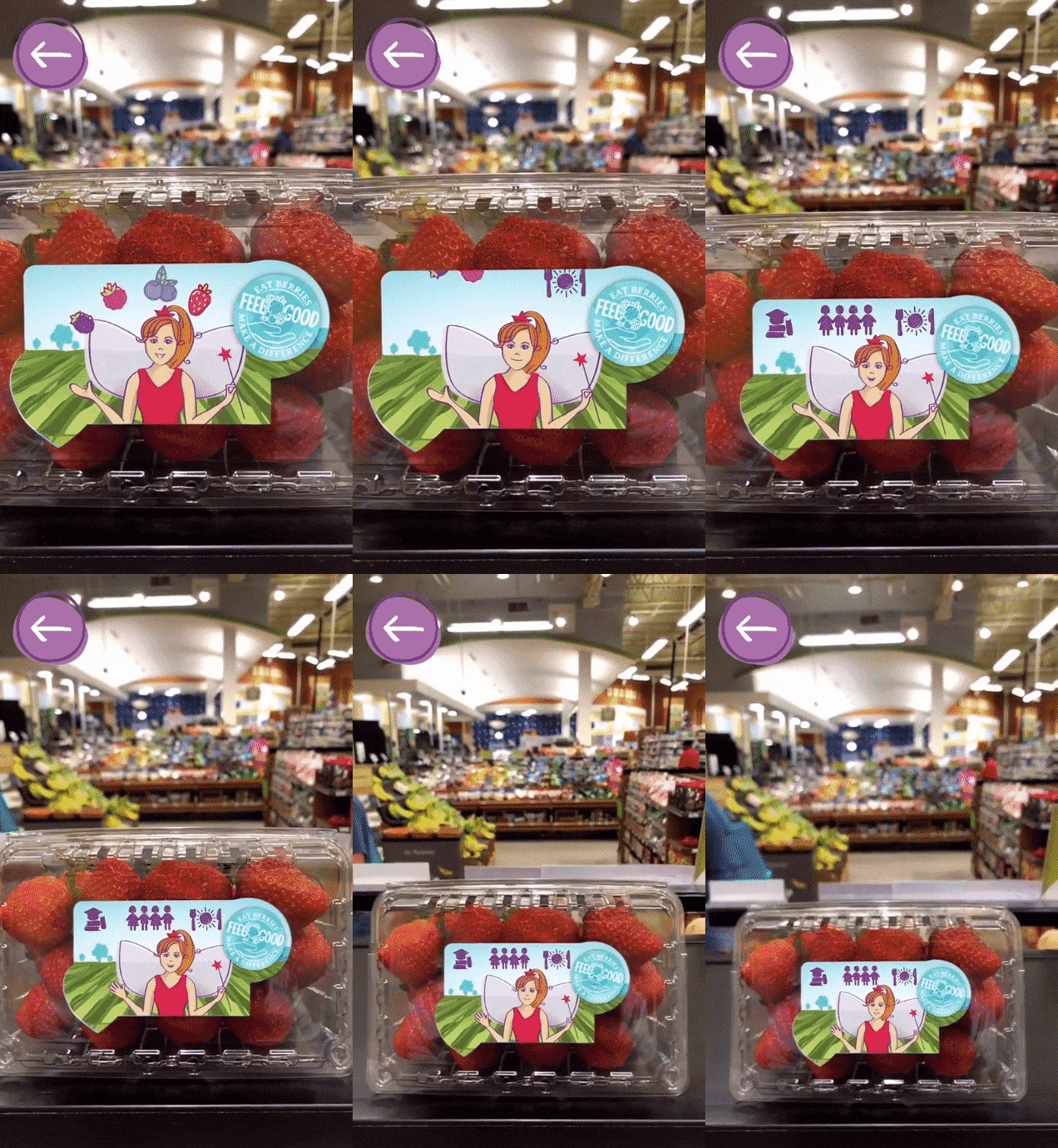
    Some brands are creating unique filters to use in social media, while others are using them to segue into an app. When Sulzer brought the idea of AR to Wish Farms owner Gary Wishnatzki, he loved the possibility of bringing their “Misty the Garden Pixie” mascot to life right on the labels we were rebranding. The fact that Misty could talk to kids, parents and consumers about their delicious berries was an exciting leap forward for the industry. Coupled with an app that could be built upon incrementally, the concept was given the green light.

    The initial goal of the project was to help Misty the Garden Pixie speak more directly to consumers. As part of the execution, the label was designed to easily change the type of berry highlighted as well as the season of the year. This would allow Wish Farms to develop campaigns around each of their four berry categories and their respective selling seasons.

    The Wish Farms AR & app combo checks multiple boxes for how a company can use AR to accelerate their brand: differentiation by being a first mover in fresh produce, educating how they are giving back to the community, along with bringing a more inviting and personal experience to their app. Users are enticed to frequently revisit the app through a rich experience of recipes, surveys, backstories on their farmers, and even a game (trick-tac-toe – we dare you to give it a try).

    When Wish Farms became the first in the berry industry to include augmented reality back in October 2019, they showcased the feature at the top produce conference in the world, astounding consumers and competitors alike with the futuristic new way of connecting with customers.

    If you decide to move forward with AR for your brand make sure to set goals and targets first. Build the use case around your target market, stay focused, and good luck!

    ,
Work with Us